Slow Drains in Several Fixtures
One slow sink is a local clog. A slow tub, a sluggish toilet, and a washer that gurgles all at once point at the main line. That is jetting territory.
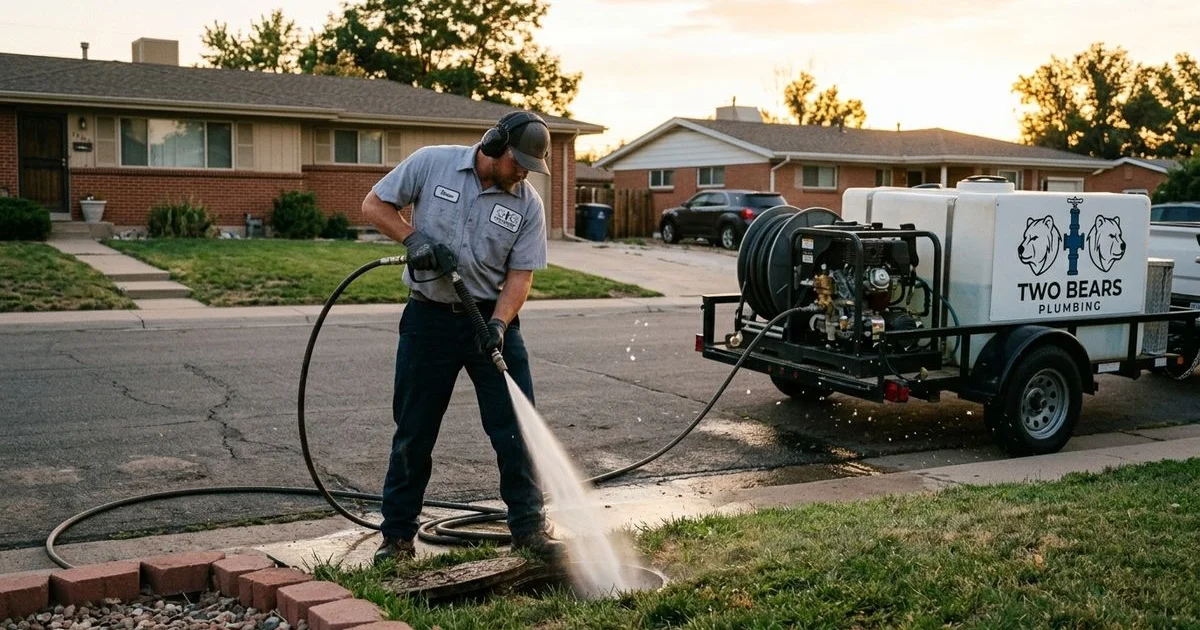
High-pressure hydro-jetting service for stubborn drain clogs, grease buildup, root intrusion, and mineral deposits in Aurora sewer lines.
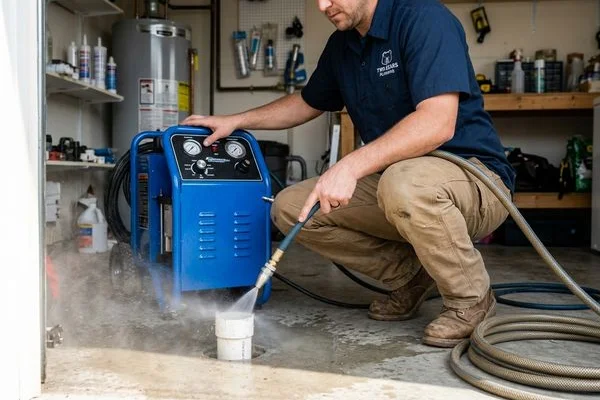
When standard drain snaking isn't enough, hydro-jetting uses high-pressure water to blast through grease, tree roots, mineral buildup, and years of accumulated debris inside your pipes. Two Bears Plumbing offers professional hydro-jetting for Aurora homes and businesses - the most effective method for clearing tough blockages and restoring full flow to aging sewer lines.
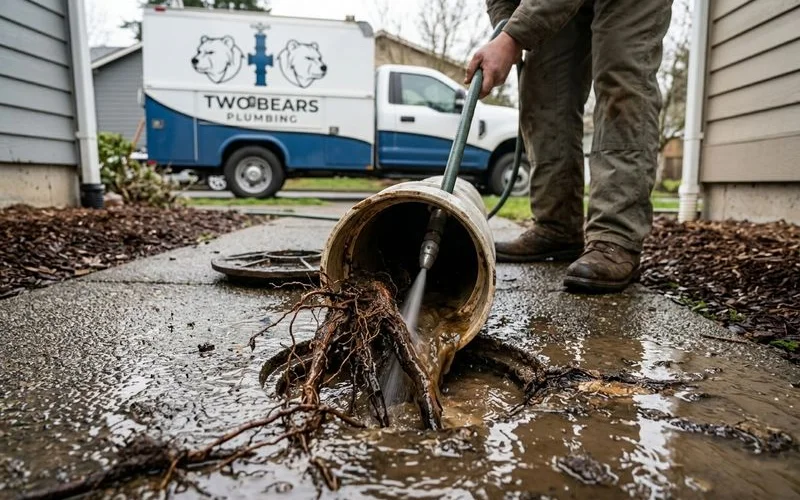
Standard drain snaking pokes a hole through the clog but often leaves buildup on the pipe walls. Hydro-jetting scours the entire inside surface of the pipe, removing:
After hydro-jetting, the pipe walls are scoured back to bare material. That slows the next clog and cuts how often you call us for the same line.
| Feature | Drain Snaking | Hydro-Jetting |
|---|---|---|
| Cost | $150-$300 | $400-$750 |
| Effectiveness | Punches through clog | Removes all buildup |
| Duration of results | Months | Years |
| Root removal | Cuts through | Blasts out completely |
| Pipe cleaning | Minimal | Full interior cleaning |
| Best for | Simple clogs | Recurring problems, grease, roots |
| For one-time simple clogs, snaking is usually sufficient. For recurring problems, grease buildup, or root intrusion, hydro-jetting is the better long-term investment. Read our full hydro-jetting vs drain snaking comparison to decide which option is right for your situation. |
We use appropriate pressure levels for each pipe material. Modern PVC handles up to 4,000 PSI easily. Older clay pipes require lower pressure and careful technique. That's why we always inspect with a camera first - it tells us what the pipe can handle.
You do not need a camera to spot a line that is going bad. The house tells you first.
One slow sink is a local clog. A slow tub, a sluggish toilet, and a washer that gurgles all at once point at the main line. That is jetting territory.
Air gets pushed back through traps when water cannot move down the line. If a toilet bubbles when the washer drains, the main is restricted.
If you have snaked the same drain twice in a year, the clog is not the problem. The buildup on the pipe walls is.
Sewage rises at the lowest opening first. In many Aurora homes that is a basement floor drain or a basement shower. Treat it as urgent and read our guide to the signs of a clogged main sewer line.
Sludge coating the pipe walls puts out a steady odor. It often fades after a good jetting, though a cracked line can smell the same.
Need Hydro-Jetting Help?
Upfront pricing. Licensed and insured. Same-day service.
The pipe tells us the age of the house before we ask. Here is what we usually see.
Aurora's own testing puts water hardness at roughly 5 to 11 grains per gallon. Over decades, that mineral load builds scale on older drain walls, especially in cast iron. Hot kitchen grease adds to it. And Colorado's freeze-thaw cycles shift soil around buried pipes, which opens joints that roots then find. We cover that pattern in our post on root intrusion in clay sewer lines.
One thing we see constantly on Aurora sewer calls: the line is rarely clogged in one spot. It is narrowed along a long run, so a snake opens a hole and the water drains for a few weeks until the walls fill back in.
More pressure is not better. The goal is to scour the pipe, not hurt it.
Pipe condition sets the pressure. Trade guidance says to run lower pressure and narrower nozzle angles on cracked clay than on sound pipe. We follow that. Sound PVC and cast iron can take working pressure up to 4,000 PSI. A fragile line gets less.
The nozzle changes the job too. A forward-facing nozzle pulls the hose through and breaks up a blockage. Rear-facing jets scrub the walls and push debris back toward the cleanout. For roots, we use a different head than we use for grease.
We also watch flow, not only pressure. A line that is already close to failing can overflow if we push too much water into it. That is another reason the camera goes in first.
We would rather tell you no than clean a line that needs to be fixed. These are the cases where we stop and talk about repair.
If the camera shows a section that has caved in or a joint that has split, jetting cannot restore the pipe. At best it clears the water for a short while. At worst it makes a broken line worse. We show you the footage and walk you through repair options, including sewer line repair and the difference between trenchless and traditional methods.
A belly is a low spot where the pipe has settled. Waste collects there no matter how clean the rest of the line is. Jetting will clear the buildup, but the sag will fill again. If the camera shows a deep belly, the honest answer is a repair, and we will say so.
A single backed-up sink or toilet does not need a jetter. A cable or a standard drain cleaning visit costs less and fixes it. We will not sell you the bigger job when the smaller one works.
Need Hydro-Jetting Help?
Upfront pricing. Licensed and insured. Same-day service.
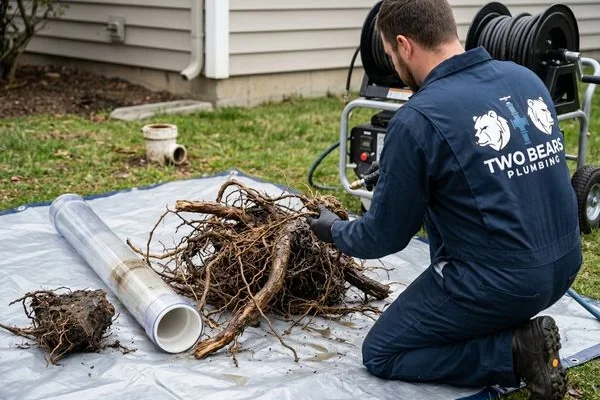
Roots go where the water is. A hairline crack or a loose joint in an older line leaks a little moisture and nutrients, and a root finds it. It grows in, thickens, and catches paper and grease. Then the line clogs.
A cable cuts the root back to the middle of the pipe. The stub keeps growing. Hydro-jetting cuts the roots flush with the pipe wall and flushes the pieces out, so you get more time between calls. But the opening is still there. We tell you that up front, and we show you on camera where the roots came in.
From there you have three choices:
Our camera footage decides which one fits. We do not push the bigger job when the smaller one will hold.
Grease is the other big reason we jet. Hot oil goes down the kitchen sink as a liquid. Then it cools in the pipe, coats the wall, and traps food and soap. Layer after layer, the pipe gets narrower.
Kitchen branch lines and the main line they feed are the usual trouble spots. A cable punches through. The grease ring stays. Jetting strips it off. If your kitchen sink keeps backing up and the disposal is not the problem, grease is the first thing we check. Our kitchen plumbing repair page covers the fixture side of it.
Jetting resets the line. A few habits keep it clean.
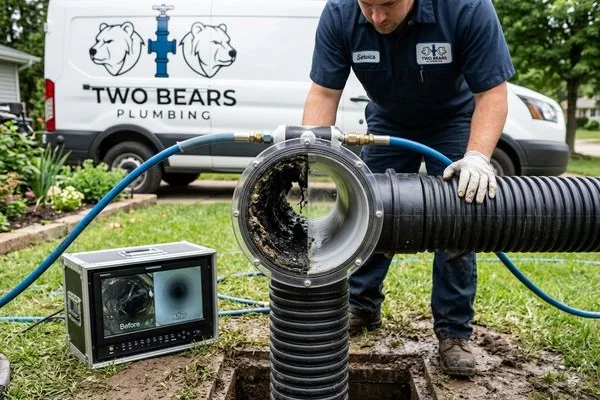
We show you the camera before and after, so you can see what was in the pipe and how it looks now.
You get one price before any work begins. That price is the price you pay.
Most hydro-jetting jobs fall between $400 and $750. The range depends on the access point, the length of line, and how heavy the buildup is. An easy cleanout is a simpler job than one with limited access. We also quote the camera inspection up front, so there is no surprise when it comes time to decide.
For a full breakdown of what drain work costs in Aurora, see our drain cleaning cost guide. If the camera shows a failing line, our sewer line replacement cost guide will help you plan.
Mike Dawson and the Two Bears team have served Aurora since 2015. We are licensed and insured, and we are based at 508 Olathe St. Call us at (720) 903-1527 and tell us what the drains are doing. We will tell you if jetting fits or if the line needs something else.
Call (720) 903-1527 for hydro-jetting service in Aurora.
Call now for same-day service. Upfront pricing, no hidden fees.
Call (720) 903-1527